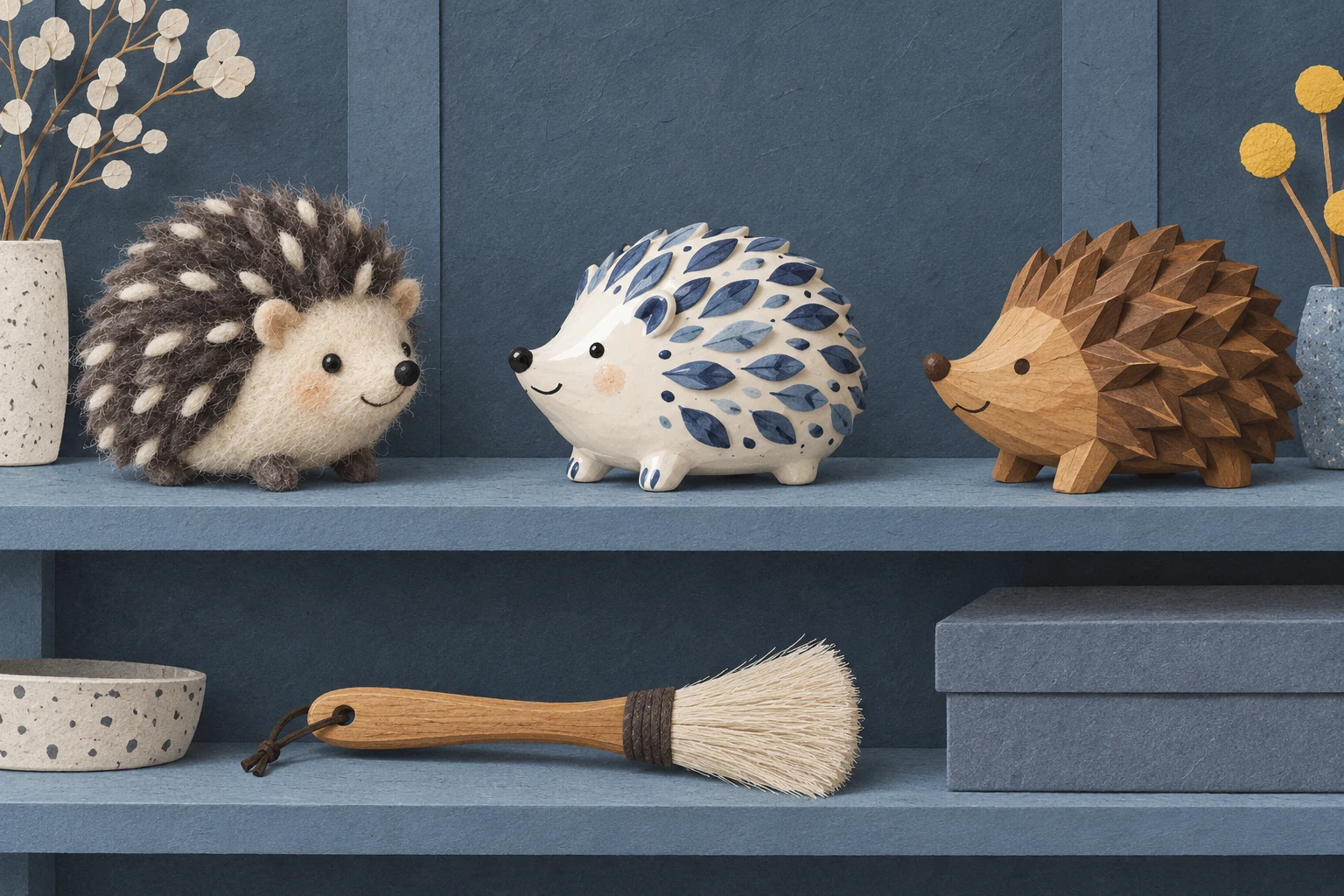
Editorial illustration of three different hedgehogs in a small, carefully spaced collection.
It begins innocently. One handmade hedgehog comes home because you like its face. Another arrives as a gift. Then you notice a third that looks nothing like the first two, and suddenly the shelf has a theme. At this point, a few questions become unavoidable.
DOES TWO COUNT AS A COLLECTION?
If you enjoy thinking of them together, yes. You do not need a cabinet, a catalog, or an impressive number. Two hedgehogs with contrasting personalities can provide plenty to look at. One upright and solemn; one round enough to suggest that standing up is somebody else’s problem.
A collection becomes interesting through the choices behind it. You might like simple silhouettes, visible stitching, unusual materials, or little faces that look faintly bewildered. Naming that preference helps you choose the next piece more thoughtfully. It also makes it easier to pass on one that is merely available.
DO THEY HAVE TO MATCH?
Matching is optional. A felt hedgehog beside a ceramic one can make both more noticeable. The fuzzy outline shows up against the smooth surface; the ceramic shape looks especially crisp next to the wool.
Try giving the group one point of connection: similar size, a shared color, or the same direction of gaze. Then allow a difference. Three identical objects can make a lovely pattern, but three handmade characters in quiet conversation may be more fun. Our closer look at handmade details offers a few things to notice.
ARE NAMES COMPULSORY?
No, although a figure with the expression of a disappointed accountant is practically asking for one. Names can make a collection feel familiar, especially when they grow out of a shared joke. They also make “please move the hedgehog” a much less efficient household instruction.
You can enjoy the objects without inventing biographies. Equally, if one has become the unofficial librarian, nobody needs to intervene. The collection belongs in your home, so its level of seriousness is entirely your decision.
WHERE SHOULD EVERYONE LIVE?
Start with a stable shelf and enough space to see each face. Place heavier pieces securely and keep fragile details away from edges. A low, sturdy riser may help a small figure show behind a larger one, but check that it cannot rock or slide.
Arrange from the viewpoint you use most often. A display designed while crouching in front of a shelf may vanish when you sit on the sofa. Take a photograph from across the room. If all you see is a lump, spread the group out. The five-room display guide has more ideas for finding a practical home.
HOW MUCH CARE DO TINY RESIDENTS NEED?
Keep the maker’s instructions and identify the materials before cleaning. Felt, painted wood, and glazed clay do not share one safe cleaning method. If you are unsure, ask before introducing water, sprays, or a vacuum attachment.
For textile pieces, choose a clean, dry display area away from strong sunlight and check occasionally for dust or pest activity. The Canadian Conservation Institute’s textile-care resources explain the main risks. Treat these as general background alongside the maker’s advice for your particular figure.
Lift ceramic pieces by supporting the body rather than a projecting detail, and move them one at a time. The Institute’s ceramics and glass care guide is useful further reading. A decorative collectible should stay out of reach of children or pets likely to treat it as a toy.
SHOULD THERE BE RECORDS?
A quick phone photo and a note of the maker, material, and date acquired are plenty for most small collections. Save any care card with them. If the piece was a gift, write down the occasion or the joke behind it while you remember.
Those notes become more interesting over time. They preserve the connections that a price tag cannot explain: the friend who chose the grumpy one, the first piece in your new home, the tiny creature that made a dull afternoon unexpectedly cheerful.
WHAT HAPPENS WHEN THE SHELF IS FULL?
Pause. Enjoy what is already there. You can rotate a few favorites rather than squeeze everyone into a crowd. A collection is allowed to reach a comfortable size. Leave enough room to see the faces you fell for in the first place.