Category: HANDMADE HEDGEHOGS

  • THE VERY SERIOUS BUSINESS OF A TINY HEDGEHOG COLLECTION

    THE VERY SERIOUS BUSINESS OF A TINY HEDGEHOG COLLECTION

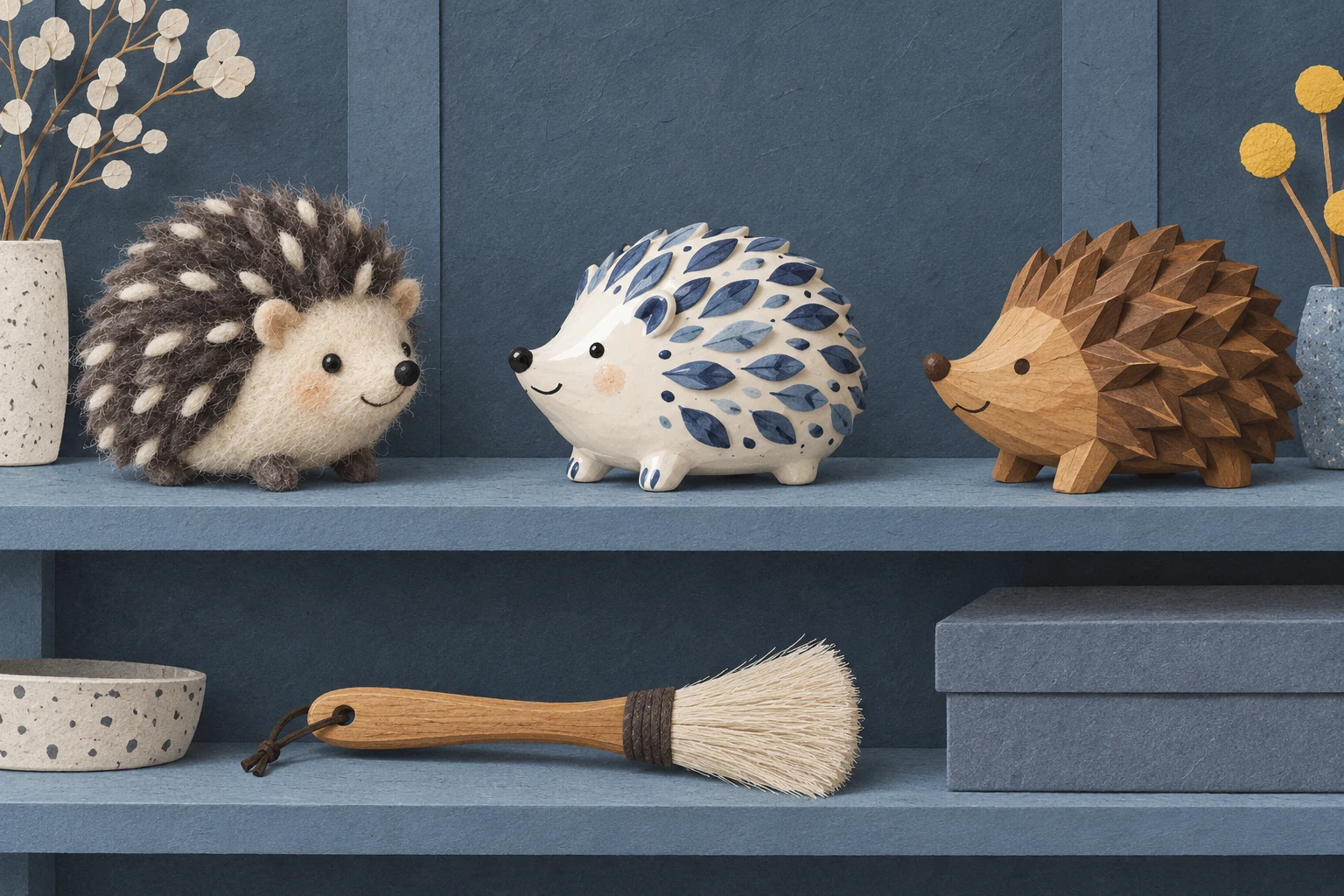
    Editorial illustration of three different hedgehogs in a small, carefully spaced collection.

    It begins innocently. One handmade hedgehog comes home because you like its face. Another arrives as a gift. Then you notice a third that looks nothing like the first two, and suddenly the shelf has a theme. At this point, a few questions become unavoidable.

    DOES TWO COUNT AS A COLLECTION?

    If you enjoy thinking of them together, yes. You do not need a cabinet, a catalog, or an impressive number. Two hedgehogs with contrasting personalities can provide plenty to look at. One upright and solemn; one round enough to suggest that standing up is somebody else’s problem.

    A collection becomes interesting through the choices behind it. You might like simple silhouettes, visible stitching, unusual materials, or little faces that look faintly bewildered. Naming that preference helps you choose the next piece more thoughtfully. It also makes it easier to pass on one that is merely available.

    DO THEY HAVE TO MATCH?

    Matching is optional. A felt hedgehog beside a ceramic one can make both more noticeable. The fuzzy outline shows up against the smooth surface; the ceramic shape looks especially crisp next to the wool.

    Try giving the group one point of connection: similar size, a shared color, or the same direction of gaze. Then allow a difference. Three identical objects can make a lovely pattern, but three handmade characters in quiet conversation may be more fun. Our closer look at handmade details offers a few things to notice.

    ARE NAMES COMPULSORY?

    No, although a figure with the expression of a disappointed accountant is practically asking for one. Names can make a collection feel familiar, especially when they grow out of a shared joke. They also make “please move the hedgehog” a much less efficient household instruction.

    You can enjoy the objects without inventing biographies. Equally, if one has become the unofficial librarian, nobody needs to intervene. The collection belongs in your home, so its level of seriousness is entirely your decision.

    WHERE SHOULD EVERYONE LIVE?

    Start with a stable shelf and enough space to see each face. Place heavier pieces securely and keep fragile details away from edges. A low, sturdy riser may help a small figure show behind a larger one, but check that it cannot rock or slide.

    Arrange from the viewpoint you use most often. A display designed while crouching in front of a shelf may vanish when you sit on the sofa. Take a photograph from across the room. If all you see is a lump, spread the group out. The five-room display guide has more ideas for finding a practical home.

    HOW MUCH CARE DO TINY RESIDENTS NEED?

    Keep the maker’s instructions and identify the materials before cleaning. Felt, painted wood, and glazed clay do not share one safe cleaning method. If you are unsure, ask before introducing water, sprays, or a vacuum attachment.

    For textile pieces, choose a clean, dry display area away from strong sunlight and check occasionally for dust or pest activity. The Canadian Conservation Institute’s textile-care resources explain the main risks. Treat these as general background alongside the maker’s advice for your particular figure.

    Lift ceramic pieces by supporting the body rather than a projecting detail, and move them one at a time. The Institute’s ceramics and glass care guide is useful further reading. A decorative collectible should stay out of reach of children or pets likely to treat it as a toy.

    SHOULD THERE BE RECORDS?

    A quick phone photo and a note of the maker, material, and date acquired are plenty for most small collections. Save any care card with them. If the piece was a gift, write down the occasion or the joke behind it while you remember.

    Those notes become more interesting over time. They preserve the connections that a price tag cannot explain: the friend who chose the grumpy one, the first piece in your new home, the tiny creature that made a dull afternoon unexpectedly cheerful.

    WHAT HAPPENS WHEN THE SHELF IS FULL?

    Pause. Enjoy what is already there. You can rotate a few favorites rather than squeeze everyone into a crowd. A collection is allowed to reach a comfortable size. Leave enough room to see the faces you fell for in the first place.
  • A GIFT THAT SAYS ‘THIS IS VERY YOU’

    A GIFT THAT SAYS ‘THIS IS VERY YOU’

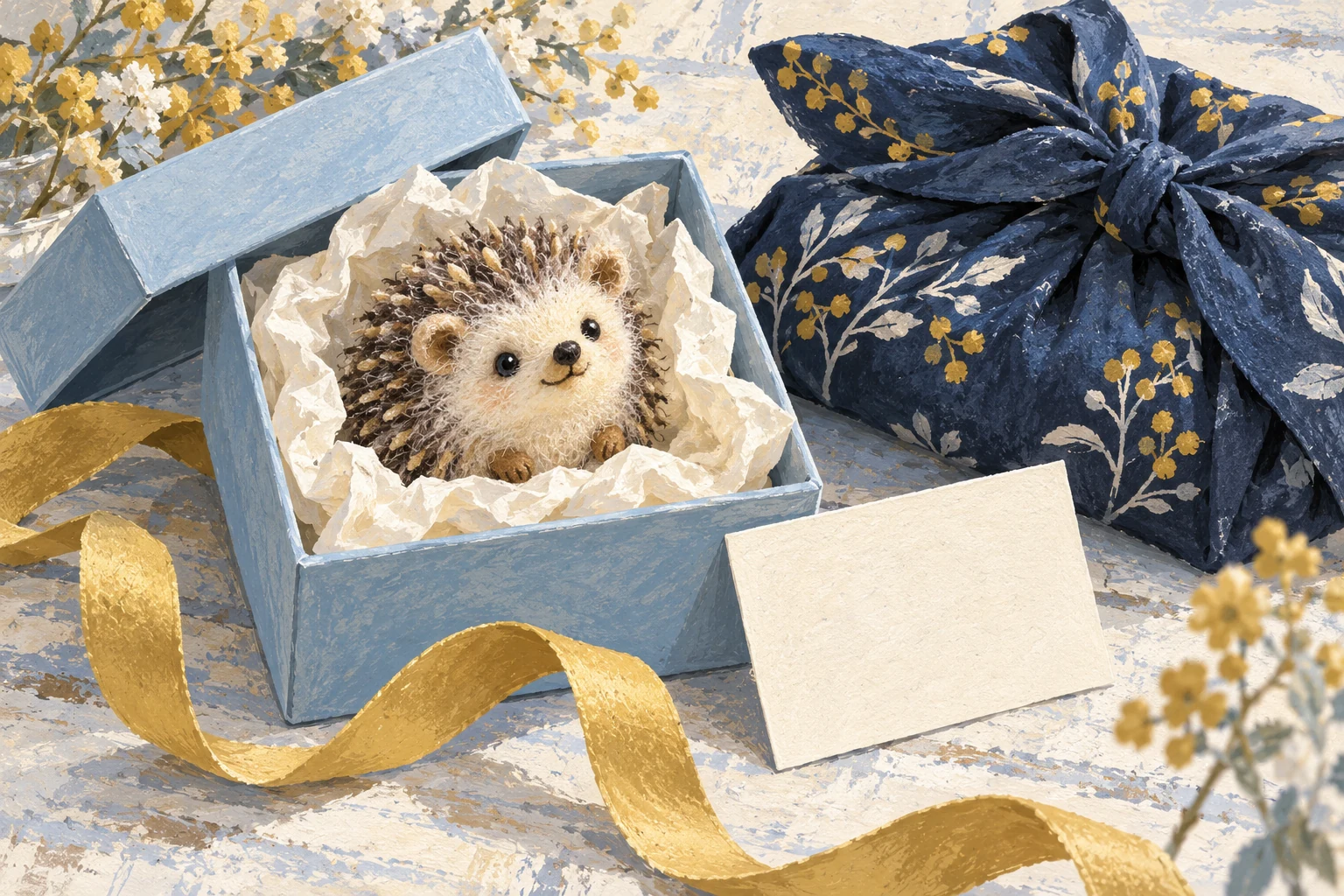
    Editorial illustration of a handmade hedgehog waiting to be given to someone special.

    Some gifts are chosen with a calendar open. Birthday, anniversary, housewarming: find the date, find the object, find the wrapping paper. Other gifts begin with a face. You see a handmade hedgehog wearing an expression of mild disapproval and immediately think of someone who will understand the joke.

    That moment of recognition is a good place to start. A small decorative creature can carry a surprisingly specific message: I know what makes you laugh. I remember the things you stop to look at. There is a space in your new home for something delightful.

    START WITH THEIR PARTICULAR KIND OF DELIGHT

    Animal lovers do not all like the same objects. One person wants a soft, round hedgehog that looks permanently surprised. Another prefers a simple carved shape with barely any face at all. Someone else will fall for the one carrying a miniature mushroom with great seriousness.

    Think about the things your recipient already keeps nearby. Are their shelves full of bright color, or do they favor quiet natural materials? Do they enjoy a joke that announces itself from across the room, or a small detail you have to discover? These observations are more useful than a generic list of gifts for a particular age.

    Size matters, too. A person living with one narrow bookshelf may appreciate a palm-sized figure more than an elaborate display. Before choosing, check the actual measurements. Close-up photographs can turn a very small hedgehog into an apparently substantial household member.

    LET THE ORDINARY OCCASIONS COUNT

    A new job provides an excellent excuse for a desk companion. Moving into a first apartment creates a place for a little resident on a shelf. A friend finishing a difficult project may enjoy something that marks the finish without turning it into a formal ceremony.

    There is also the unannounced gift. The one handed over because you were thinking of someone, with no event requiring a response. Keep it modest enough that the recipient can simply enjoy it. An extravagant surprise can create a debt of gratitude; a small, well-chosen hedgehog leaves room for a laugh.

    Match the tone to your relationship. A joke about a grumpy expression can be affectionate between close friends and land badly with someone you barely know. When in doubt, let the object be charming and the message be straightforward.

    LOOK AT HOW IT WAS MADE

    Handmade pieces offer different kinds of beauty. Felt gives a rounded body softness and visible fibers. Stitching can make a face wonderfully expressive with very little detail. Clay can hold the marks of individual tools. Carved wood can make the grain part of the animal’s shape.

    Use the maker’s description to find out what you are choosing. Ask about materials, dimensions, care, and any delicate details if the listing leaves you uncertain. A decorative collectible may have small parts or fragile features, so check its stated suitability before giving it to a child.

    Variation can be lovely, but it should make sense. A gently off-center nose might supply the entire personality. A loose attachment needs attention. Our piece on the character of handmade hedgehogs looks more closely at that distinction.

    WRITE THE NOTE BEFORE YOU WRAP IT

    A note can explain why this particular creature belongs with this particular person. It need not sound polished. One clear sentence is enough, especially when it contains a detail only the two of you would recognize.

    For a new desk, you might write: “For your first week. He has strong opinions about meetings.” For a housewarming: “Your new place needed someone to keep an eye on the books.” For a friend who loves quiet mornings: “A small companion for your coffee corner.” These are starting points; your own shared joke will probably be better.

    Avoid making the note do too much. You do not have to explain the symbolism of every spine. If the reason is simply that the face made you think of them, say that. It is a rather good reason.

    MAKE OPENING IT PART OF THE PLEASURE

    A tiny gift benefits from a little pause before its face appears. Place it in a box that protects its shape, with enough suitable packing to keep it from moving. Nestle it so the recipient can lift it by the body, rather than tugging at an ear or an accessory.

    Reusable fabric can make a beautiful outer wrapping. Japan’s Ministry of the Environment has an illustrated guide to furoshiki wrapping methods if you would like to try a cloth wrap around the box. Pick a cloth the recipient can use again, and tie it loosely enough to open without a struggle.

    Let the wrapping suit the gift. Plain paper, a scrap of ribbon, or a cloth you already own may be all it needs. The handmade figure should be the interesting part. Include the maker’s care information somewhere it will survive the enthusiasm of unwrapping.

    GIVE THEM ROOM TO MAKE IT THEIRS

    It is tempting to choose the hedgehog’s entire future: its name, its shelf, its little backstory. Leave a little room. Suggest a place if asked, but let the recipient discover where it belongs. They might put it somewhere you would never have considered.

    The name often arrives on its own. A solemn ceramic hedgehog can become the household’s least qualified security guard. A soft one may acquire a name from an old family joke. Once that happens, the gift has crossed into their everyday life.

    If you want to help with placement, send along our five-room decorating guide after the gift has been opened. There is no need to turn the handover into an instruction session. Part of the pleasure is moving the little thing around until a corner suddenly feels right.

    LET ONE GOOD GIFT BE ENOUGH

    A successful hedgehog gift does not automatically mean the person wants a new hedgehog for every birthday. Ask before starting a tradition. Some people love building a collection; others love the single figure precisely because it stands alone.

    The nicest outcome is often small and private. Weeks later, the recipient notices the hedgehog while reaching for a book and remembers who gave it to them. The occasion has passed. The wrapping is gone. That particular face is still there, quietly keeping the thought alive.

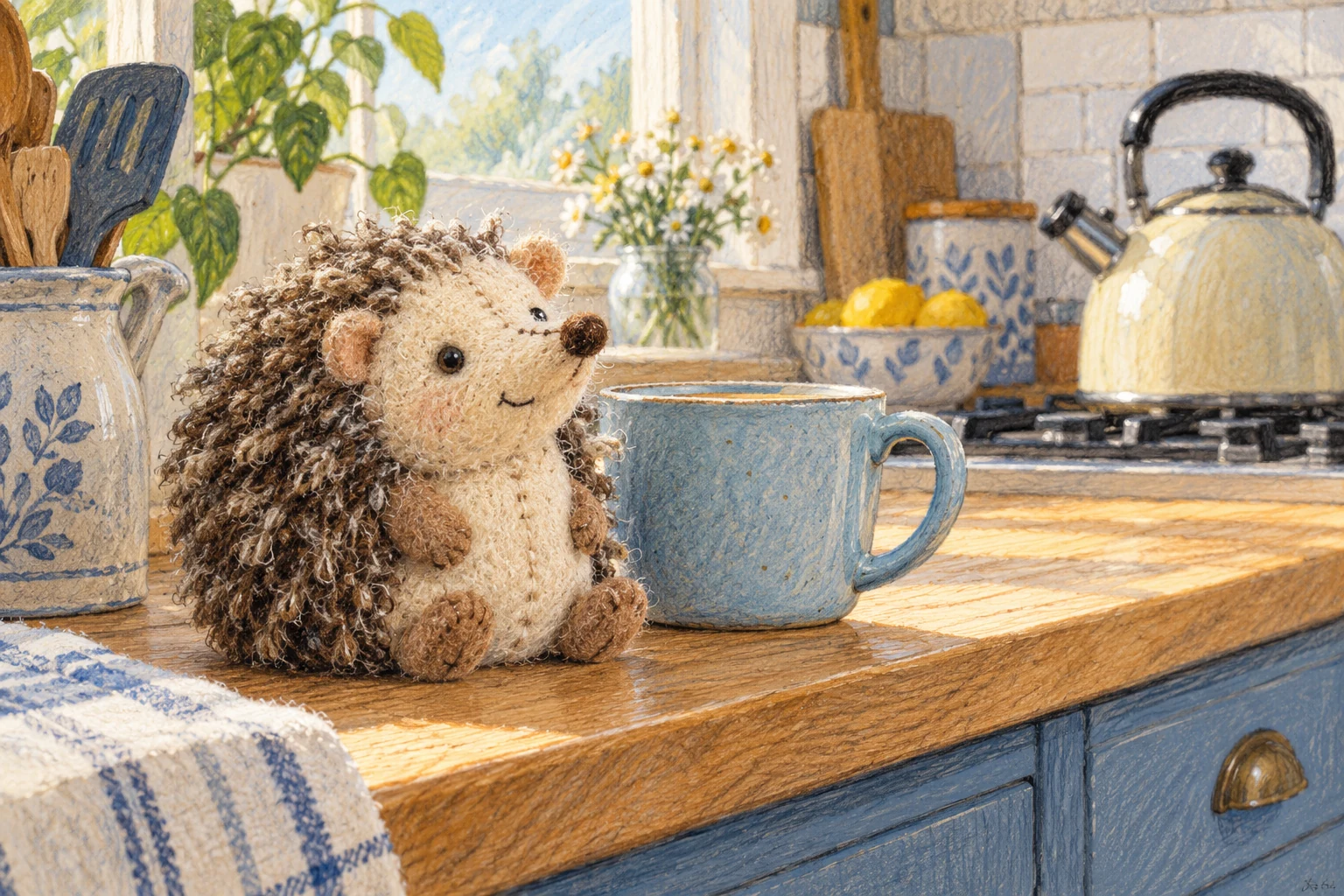
  • THE HEDGEHOG BY THE KETTLE

    THE HEDGEHOG BY THE KETTLE

    Editorial illustration of a felt hedgehog sharing a quiet kitchen corner.

    The kettle is making its impatient little rumble. Your phone has already supplied three things to worry about. There is a spoon in the sink that apparently nobody owns. On the dry shelf beside the mugs sits a small handmade hedgehog, looking unusually pleased with the situation.

    It is difficult to maintain a properly impressive bad mood in front of a face like that.

    This is part of the appeal of novelty hedgehogs. They occupy so little space, yet they can change the expression of a room. A shelf becomes somewhere you glance on purpose. A workday acquires a tiny, slightly ridiculous witness.

    The handmade ones reward a second look. Perhaps the wool around the ears is a little fluffier than the rest. Perhaps a painted nose leans left. Perhaps the maker has given a creature the size of a plum the bearing of a retired headmaster. Those small decisions make it memorable.

    Then familiarity takes over. You start expecting the hedgehog to be there. Move it while cleaning and the corner looks oddly vacant. Put it back and the kitchen feels settled again. It has become part of the household without contributing anything to the electricity bill.

    There is room for that kind of attachment. We spend enough time choosing things for efficiency, storage capacity, battery life, and how easily they wipe clean. Choosing one object because its face makes you happy is a perfectly respectable decision.

    The trick is to put it where your day actually happens. A protected corner near the tea things. The shelf you see when you shut your laptop. Beside the bowl where your keys land. Our room-by-room decorating guide has a few practical ideas, including places where delicate materials will be more comfortable.

    And if this small creature sends you looking more closely at other handmade objects, try browsing the V&A’s online collections. Follow a material, a shape, or simply your curiosity.

    For now, the kettle has clicked off. The spoon is still in the sink. The hedgehog remains serenely unhelpful.

    Somehow, the morning is a little better.

  • ONE SMALL HEDGEHOG, FIVE VERY DIFFERENT ROOMS

    ONE SMALL HEDGEHOG, FIVE VERY DIFFERENT ROOMS

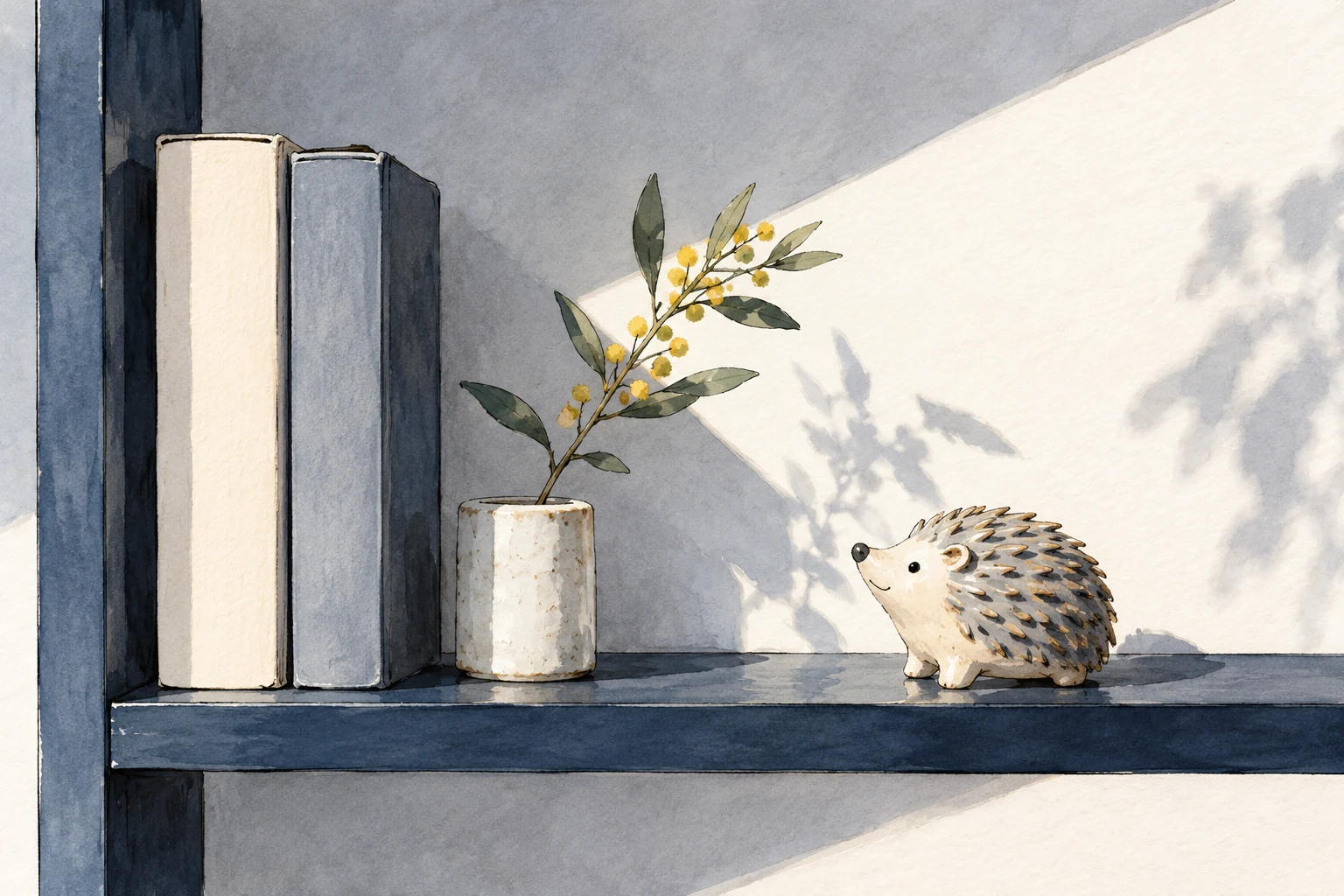
    Editorial illustration of a small ceramic hedgehog with room to shine on a bookshelf.

    A handmade hedgehog can disappear among a dozen ornaments or become the thing everyone notices. Usually, the difference is placement. Give that little face a clear background, some room around it, and a place in your normal line of sight.

    Before rearranging the house, carry the hedgehog from room to room. Set it down, step back, and look again from the doorway. A spot that seems perfect close up can swallow a small object at a distance. These five starting points each offer a different sort of pleasure.

    THE DESK THAT NEEDS A LESS SERIOUS COLLEAGUE

    A desk is a good home for a hedgehog with a faintly officious expression. Position it just beyond the keyboard, somewhere you can see it while thinking, without sacrificing the space your hands need. A tiny creature apparently supervising a spreadsheet has considerable comic value.

    Keep the immediate surroundings simple. A pencil cup, a lamp, and one small figure already make a scene. Add a phone stand, three cables, a stack of receipts, and an enormous water bottle, and the hedgehog starts looking like it needs rescuing.

    Try turning it slightly toward your chair rather than squarely toward the room. That small adjustment makes the arrangement feel personal. If the desk gets crowded, use a stable shelf above it. Avoid balancing the figure on a monitor, where a nudge or a moving cable could send it flying.

    THE BOOKSHELF WITH BREATHING ROOM

    Books supply scale, color, and ready-made company for a handmade object. A pale felt hedgehog shows up well against darker bindings; a darker wooden one may look lovely in front of a light wall. The contrast matters more than matching every color.

    Pull two or three books slightly forward, then place the hedgehog beside them. Leave a visible patch of empty shelf around its face. There is no need to buy a special stand or build a miniature forest. A little space lets the workmanship do the talking.

    Resist using a delicate figure as a bookend unless it was actually designed for the job. Heavy books have poor manners. For ideas about looking closely at shapes and materials, the V&A’s collection-browsing guide is a pleasant starting point. You can search by material and notice which combinations appeal to you.

    THE ENTRYWAY THAT GREETS YOU

    The entryway offers a different reward: a familiar face at the point where you come home. A little hedgehog beside the key bowl can make an otherwise practical ledge feel welcoming. Choose the protected end of the surface, away from bags being dropped and sleeves sweeping past.

    Think about the view with the front door open. Does the figure show up, or is it hidden behind the post? Sometimes moving a bowl a few inches is enough. A shallow tray can give a small arrangement a clear boundary, provided everything sits securely.

    Keep one generous landing space completely clear. The arrangement needs to survive an ordinary Tuesday, when you have shopping in one hand and wet mail in the other. If you have to rearrange it every time you arrive, try a less busy spot.

    THE BEDROOM’S QUIET CORNER

    On a bedroom shelf, a handmade hedgehog can be quieter company. The softer textures of felt or stitched fabric sit comfortably near books and woven materials. A smooth ceramic figure offers a different pleasure: the way its outline catches the light.

    Try placing it where you see it while drawing the curtains or putting a book away. A familiar daily movement gives you a reason to notice it. The bedside table works only if there is still enough space for the lamp, water, and whatever else belongs there.

    Keep delicate pieces out of strong direct sunlight, especially dyed textiles. If you are uncertain about the material or finish, ask the maker about display conditions. You can find more general background in the Canadian Conservation Institute’s textile-care resources. A decorative figure should also stay beyond the reach of anyone likely to mistake it for a toy.

    THE KITCHEN, AT A SAFE DISTANCE

    The kitchen is where a lot of life happens, which makes it tempting hedgehog territory. A dry shelf near the breakfast things lets a small figure join the morning routine. A ceramic face peeping past a plain mug can be enough to make the corner feel finished.

    Choose distance from the stove, sink, kettle steam, and food preparation. Felt absorbs kitchen grime rather enthusiastically, and decorative finishes may have cleaning limits. A sheltered shelf across the room is often a better choice than the counter itself.

    Look at the arrangement in the evening as well as in daylight. Does a cupboard shadow hide the face? Is the spot still useful when you are cooking? The best placement feels easy to live with. For a gentler take on that everyday companionship, read THE HEDGEHOG BY THE KETTLE. Then give your own small resident a trial address. You will soon know if it belongs.

  • A CROOKED NOSE IS NOT A DEFECT

    A CROOKED NOSE IS NOT A DEFECT

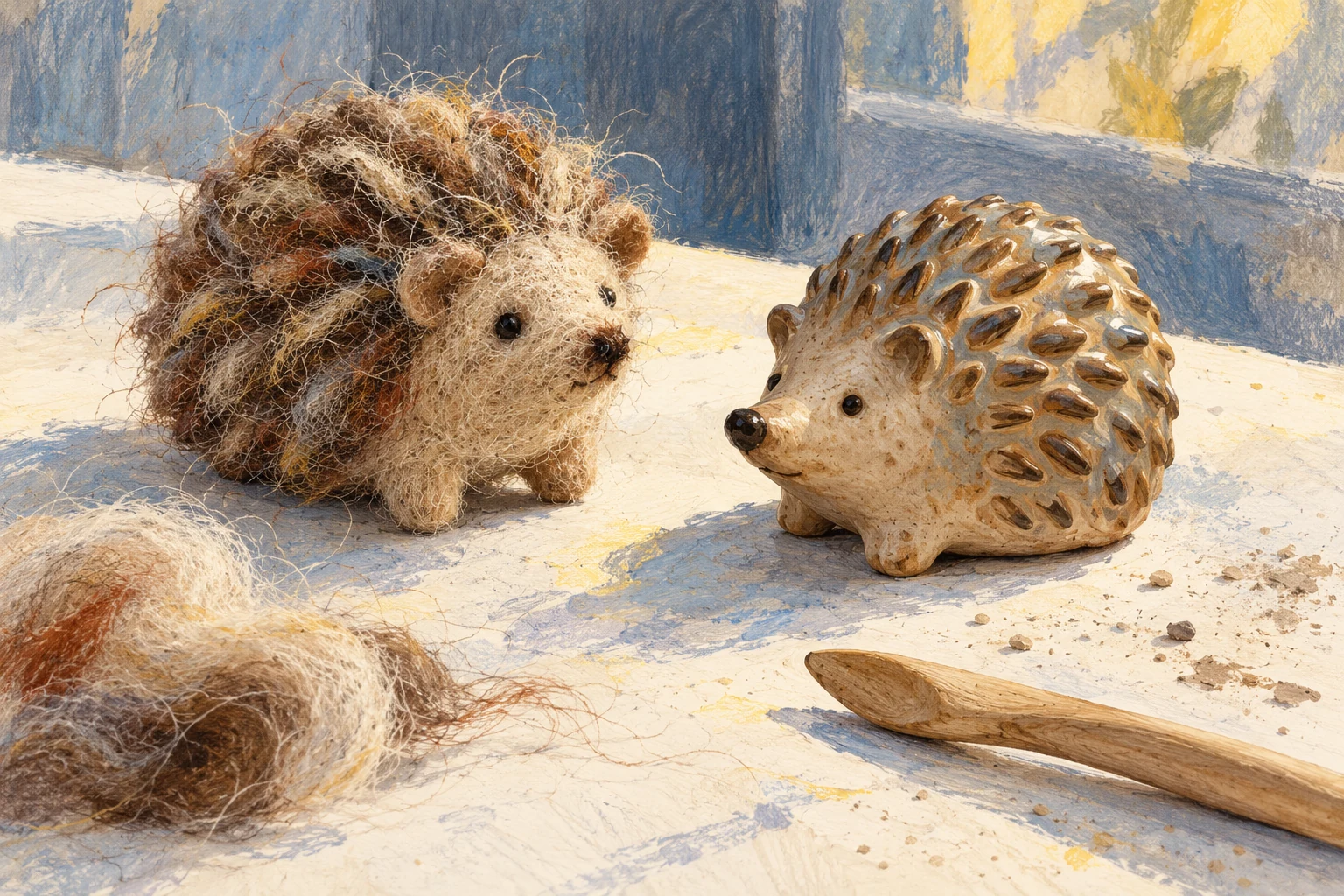
    Editorial illustration celebrating the textures and individual faces of handmade hedgehogs.

    Take two handmade hedgehogs made to the same design and put them side by side. At first they may seem like twins. Look a little longer. One has a more pointed face. One appears to be considering a difficult question. The other looks as though it has already eaten the evidence.

    The difference might be almost nothing: an eye set slightly higher, a shorter snout, a small change in the curve of the back. Yet you will probably prefer one. You may find yourself unable to explain why.

    That is a large part of the beauty of handmade novelty hedgehogs. The maker works at a scale where tiny decisions have outsize consequences. Move a nose a fraction and the whole expression changes. Add a little more fullness beneath the chin and a solemn creature becomes a contented one.

    Materials join in. Wool has loose fibers that soften the outline. A stitched seam makes a small, readable path across fabric. Clay takes impressions from tools and fingers, then meets the complications of its finish. Wood offers grain that will not politely repeat itself from one piece to the next.

    None of this requires a grand story about the maker. You can enjoy the evidence in front of you. Turn the figure gently, if its construction allows. Notice where the shape changes, how the underside is finished, and which details have been simplified. A convincing little hedgehog often relies on surprisingly few features.

    If that looking makes you curious about other kinds of handwork, the V&A’s history of needlework samplers is an absorbing detour. It is a useful reminder that small stitches can carry practice, skill, and individual choices worth examining closely.

    There is a limit to the romance of irregularity, of course. Handmade work deserves the same attention to sound construction as anything else. A wobbling base, a loose eye, or a crack is a practical issue. Calling every fault “character” does the maker and the buyer a disservice.

    The interesting distinction is between a sound object with an individual expression and an object that needs fixing. The former can make you smile every time you pass it. The latter deserves an honest conversation with whoever made or sold it.

    A crooked stitched nose on a well-made face may be exactly right. It gives your eye somewhere to return. You recognize that specific hedgehog among others. Eventually, it stops being “the ornament” and becomes the little creature beside the books.

    That familiarity is earned through looking. The object does not have to be rare or technically dazzling. Sometimes a maker has simply found the right combination of round body, dark eyes, and absurdly earnest face.

    For ways to give those details room to show, try our guide to displaying a hedgehog around the home. A little space and an uncluttered background are often enough.